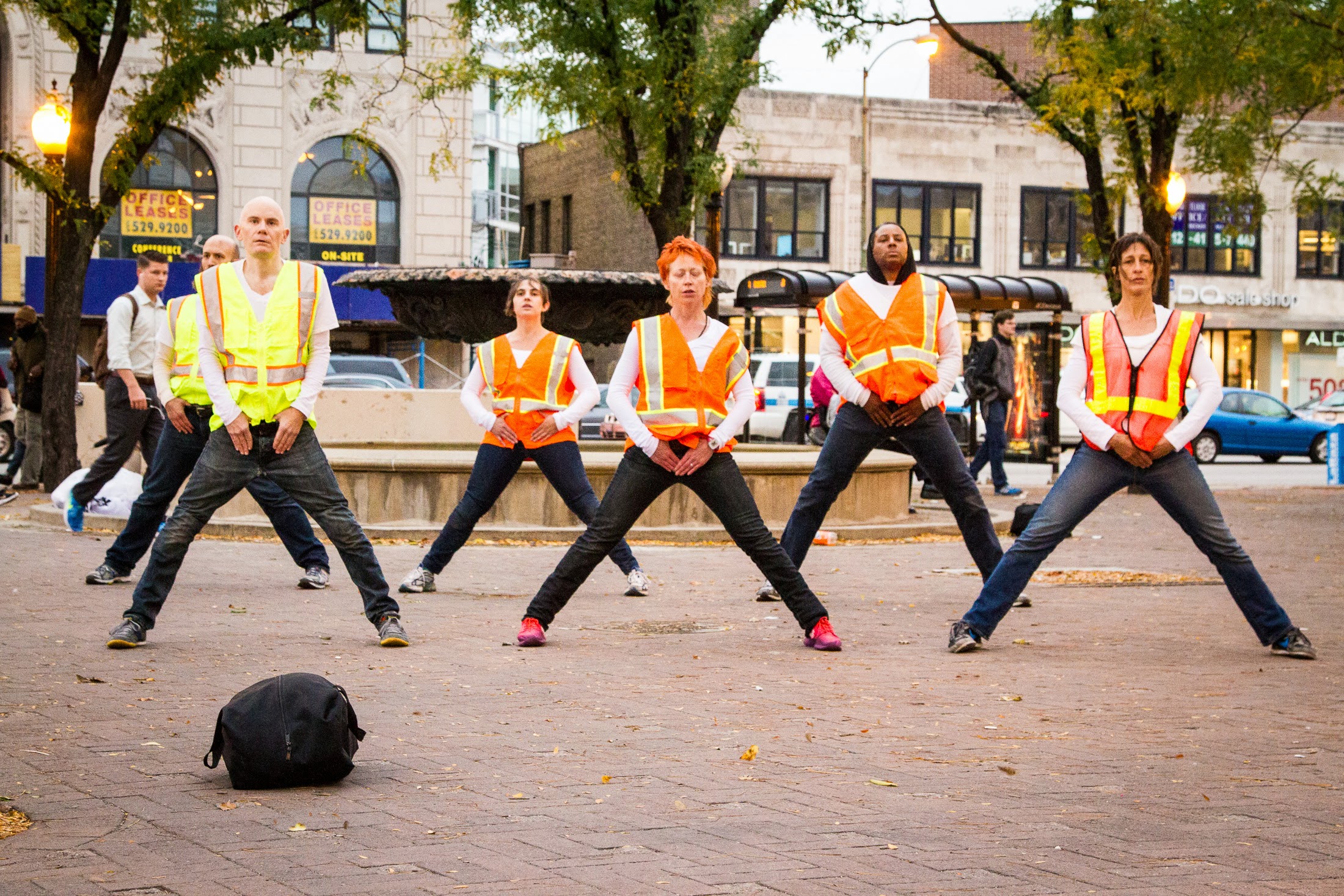
 Emergency Response Team, 2014 Photo by Jamie Gannon
Stanford linguistics professor Arnold Zwicky coined the former term in 2006 to describe the syndrome in which a concept or thing you just found out about suddenly seems to crop up everywhere. It’s caused, he wrote, by two psychological processes.
The first, selective attention, kicks in when you’re struck by a new word, thing, or idea; after that, you unconsciously keep an eye out for it, and as a result find it surprisingly often.
The second process, confirmation bias, reassures you that each sighting is further proof of your impression that the thing has gained overnight omnipresence.
Armed with this knowledge, we can attempt to proliferate new ideas by performing art in the world. Strategically, we potentially increase the opportunity to witness the making of art, thereby increasing the possibility for frequency illusion of these acts to occur. This could increase the capacity for creative problem solving skills in any audience.
I wish to infect people with a fierce resistance to the status quo by participation in creative acts. My belief is in finding our most powerful selves, capable of creating greater good, each of us worthy of empathy and encouragement.
Particularly now, as the proliferation of fear, phobia, and violence in America is capable of creating catastrophe in the collective psyche. Creative engagement in public could be an act of healing, to recover and reconstruct an alternate future.


 Butoh Curious Chi